What is Physiological Pacemaker Implantation?
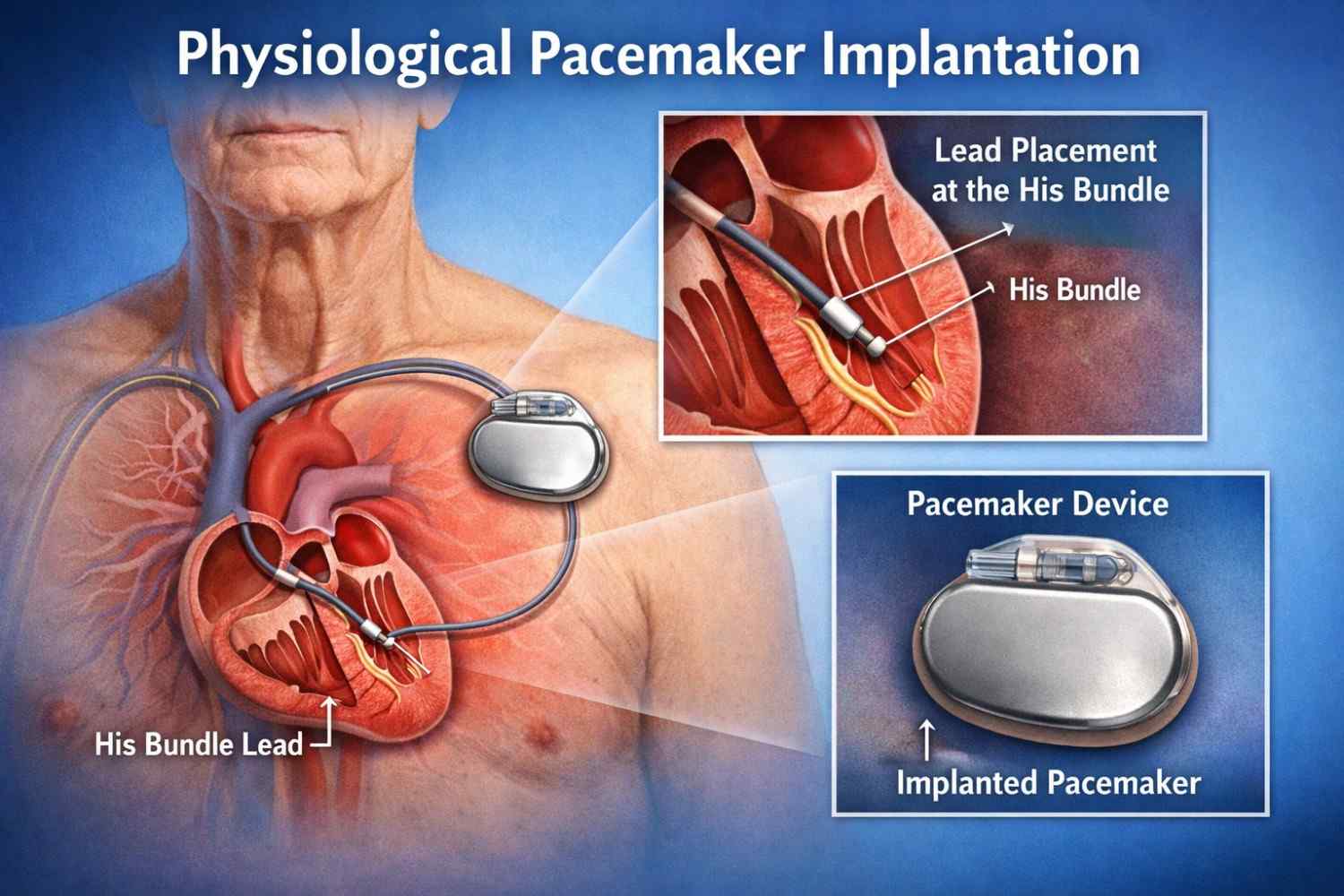
Traditional pacemakers stimulate the muscle of the right ventricle, which can sometimes cause the heart chambers to beat out of sync. Physiological pacing instead targets the heart’s natural electrical “wiring”—specifically the His Bundle or the Left Bundle Branch. Physiological Pacing (also known as Conduction System Pacing) is the new gold standard in India, moving beyond traditional methods to protect long-term heart function.
Why is a Pacemaker Needed?
Your heart relies on a natural electrical system to pump blood. When this system fails, the heart may beat too slowly (Bradycardia) or skip beats, leading to dizziness, fatigue, or fainting. A pacemaker monitors your heart 24/7 and sends tiny electrical pulses only when needed to maintain a steady rhythm.
Advanced Pacing Options in India
We offer a range of solutions tailored to your specific cardiac anatomy:
- Physiological Pacing (CSP):The gold standard in modern cardiology. By stimulating the heart’s natural conduction pathways (His-bundle or Left Bundle Branch), it mimics a natural heartbeat and prevents long-term heart failure.
- Leadless Pacemakers:A revolutionary, “invisible” option like the Micra™. This tiny capsule is placed directly inside the heart without any chest incisions or wires (leads).
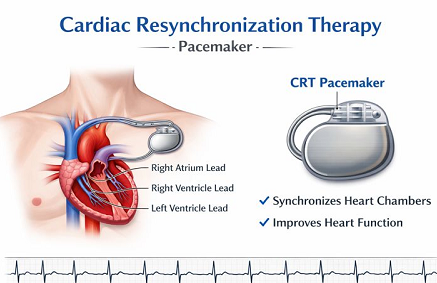
- Traditional Dual-Chamber Pacing:A highly reliable method using two leads to synchronize the upper and lower chambers of the heart.
The Procedure: What to Expect
Pacemaker implantation is a routine, minimally invasive procedure usually performed under local anesthesia.
- Insertion:A small incision is made just below the collarbone.
- Lead Placement:Insulated wires are guided through a vein into the heart using real-time X-ray imaging.
- Connection: The leads are connected to the pulse generator (the “battery”), which is tucked into a small pocket under the skin
- Testing: Our electrophysiologists program the device to match your body’s specific needs.
Recovery and Life After Implantation
Most patients return to normal daily activities within a week. While you should avoid heavy lifting or reaching high for 4–6 weeks, modern pacemakers are highly shielded. You can safely use cell phones, microwaves, and most household appliances.
We provide all patients with a Pacemaker ID Card and a schedule for remote monitoring or in-person check-ups.
Book a Consultation Today
If you or a loved one is experiencing unexplained fainting, shortness of breath, or a slow pulse, consult our Cardiac Electrophysiologoist.